
Waterproof vs. Water-repellent: Fabric differences that 90% of people get wrong
About the author
Youvion focuses on developing functional fabrics for outdoor apparel, covering solutions for inner, middle, and hardshell outer layers. Through years of collaboration with global outdoor brands and garment factories, we've found that many buyers often confuse waterproof with water-repellent fabric parameters when selecting products. This misjudgment can directly result in finished products failing to meet market expectations, leading to unnecessary losses.
Foreword
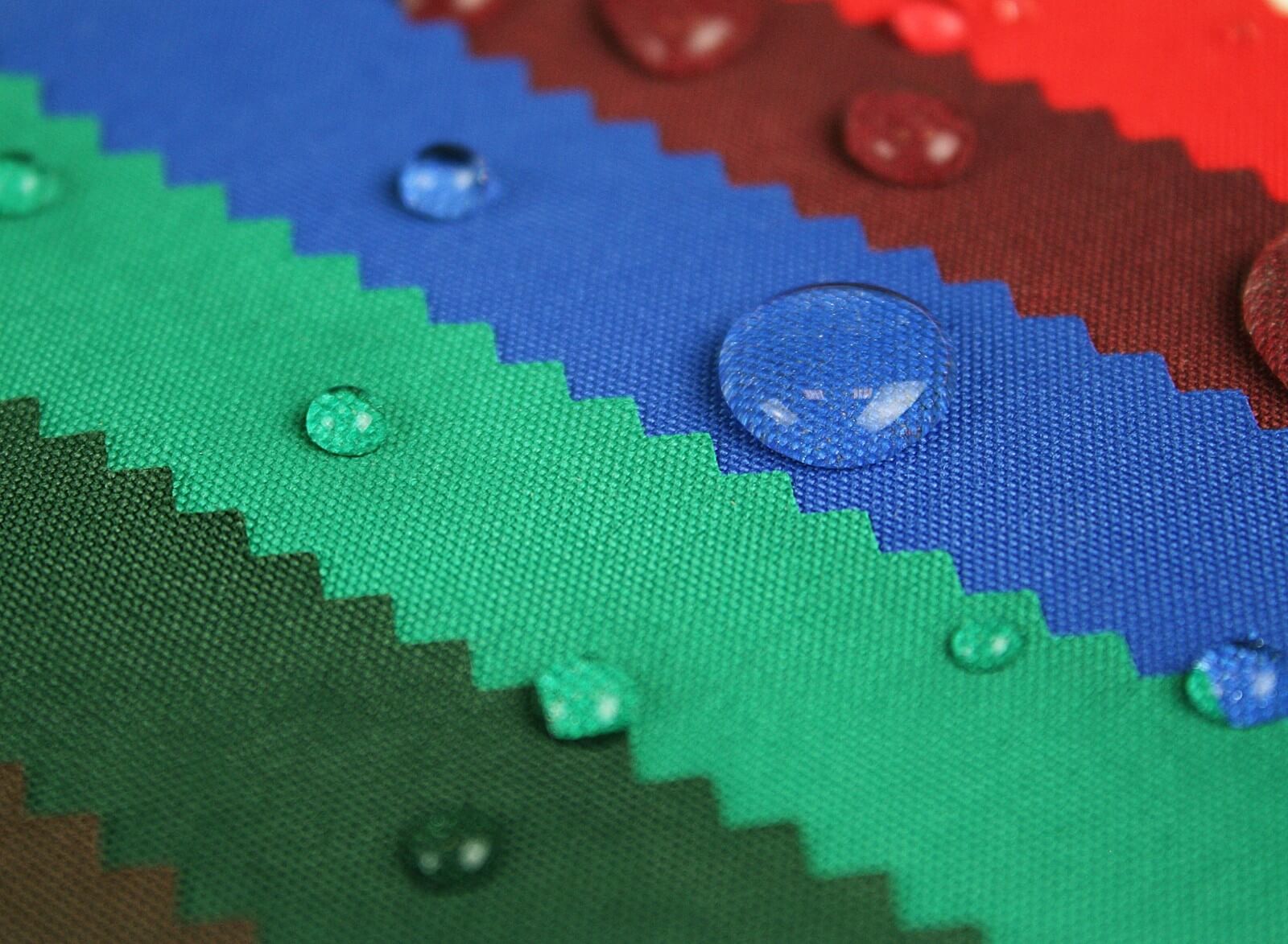
When purchasing outdoor jackets, softshells, and sportswear, many people easily confuse waterproof with water-repellent . Many product labels on the market also misuse these two concepts, leading to many embarrassing situations: clothing advertised as "rainproof" leaks through in moderate to heavy rain. Youvion Industry Insights: Based on our actual project experience, confusing DWR water-repellent properties with true waterproof performance is one of the most common reasons for the failure of new outdoor apparel product development.
Water-repellent fabrics and waterproof fabrics are completely different in their working principles, testing standards, and applicable scenarios. This article outlines the core differences, testing indicators, and fabric procurement recommendations for apparel brand purchasing and product development personnel.
1.Core Definitions and Working Principles
1.1 What is Water Repellent (DWR) Technology?
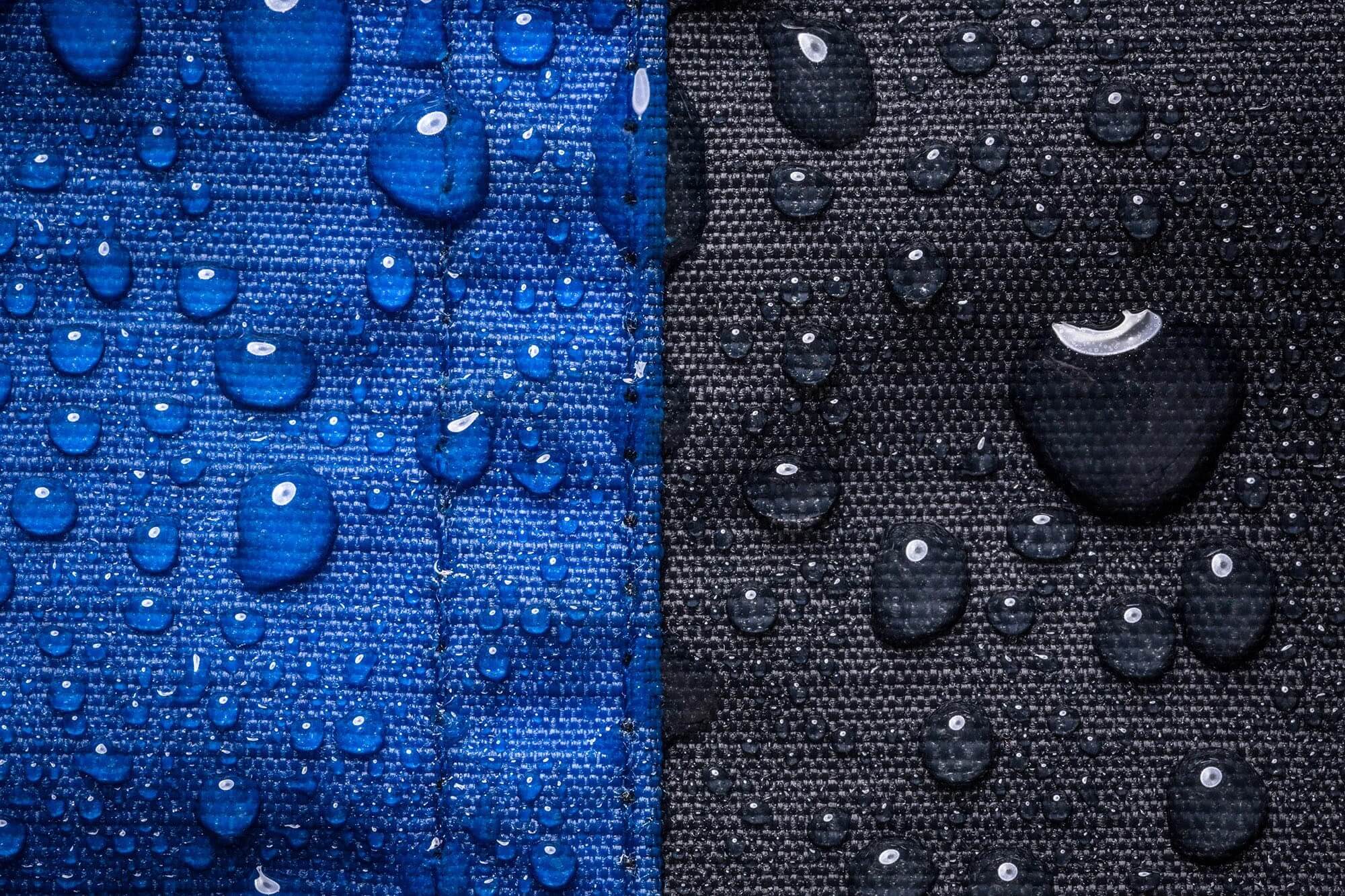
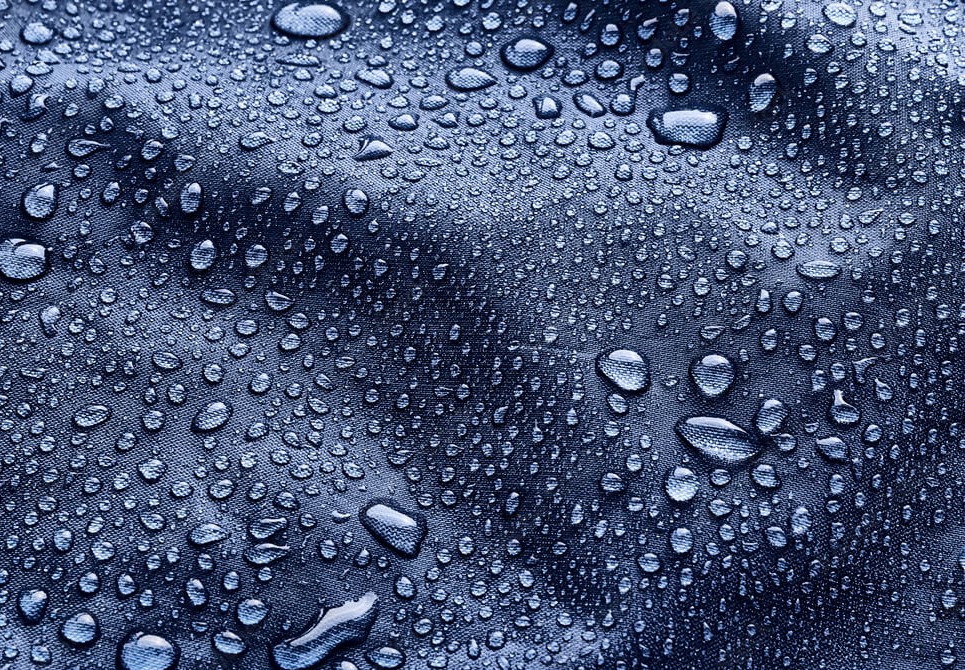
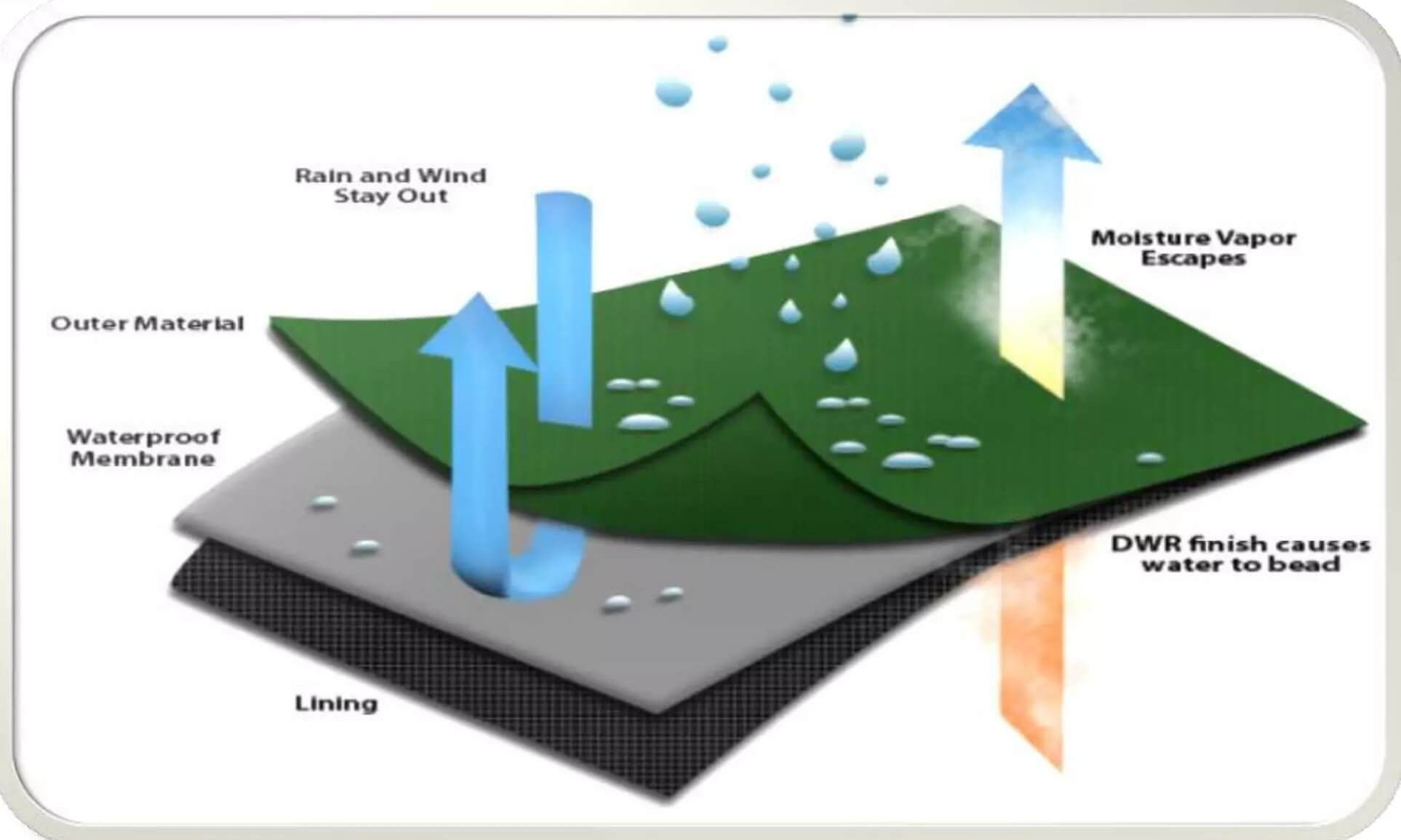
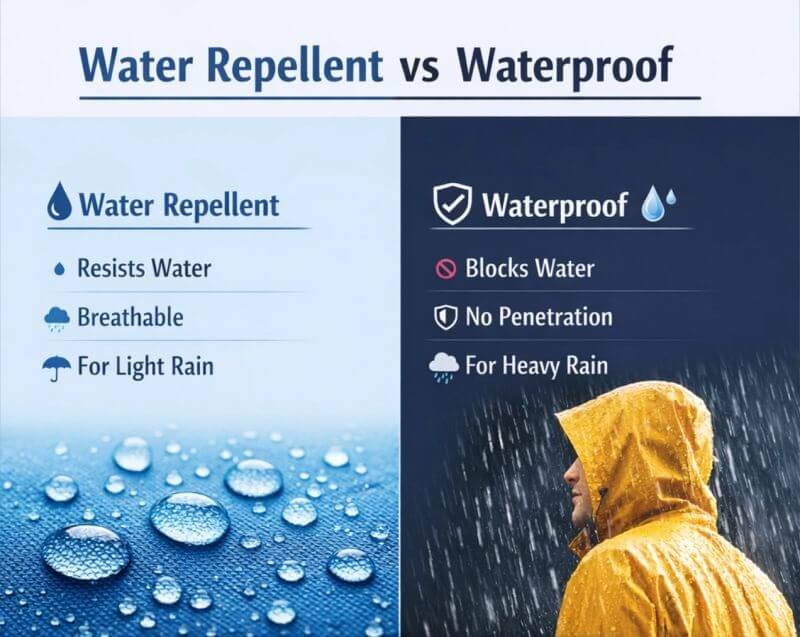
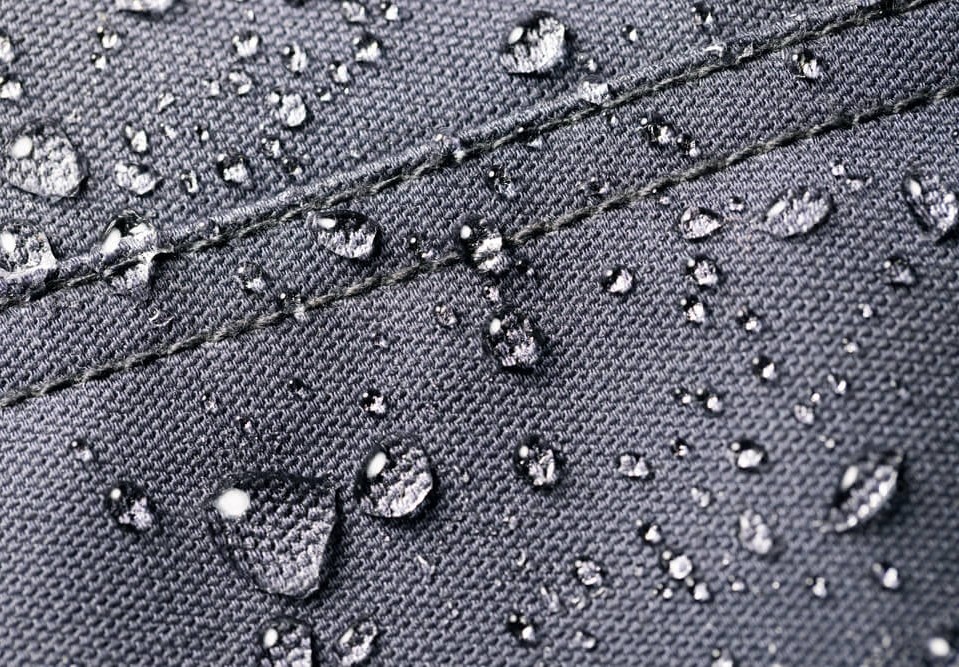
Water-repellent fabrics rely on the surface chemical coating of DWR's durable water-repellent treatment to achieve a lotus leaf effect: water droplets will form round beads on the fabric surface and roll off, wetting the fabric but not penetrating into the fabric surface.
- The fabric does not have a waterproof membrane layer inside;
- It can only protect against surface splashes and light rain;
- When exposed to continuous heavy rain or water pressure, the DWR coating will fail, and water will directly penetrate the fabric.
- After repeated washing, friction, and aging, the water-repellent effect will decrease. However, its performance can be restored by spraying a water-repellent agent.
1.2 What is waterproofing?
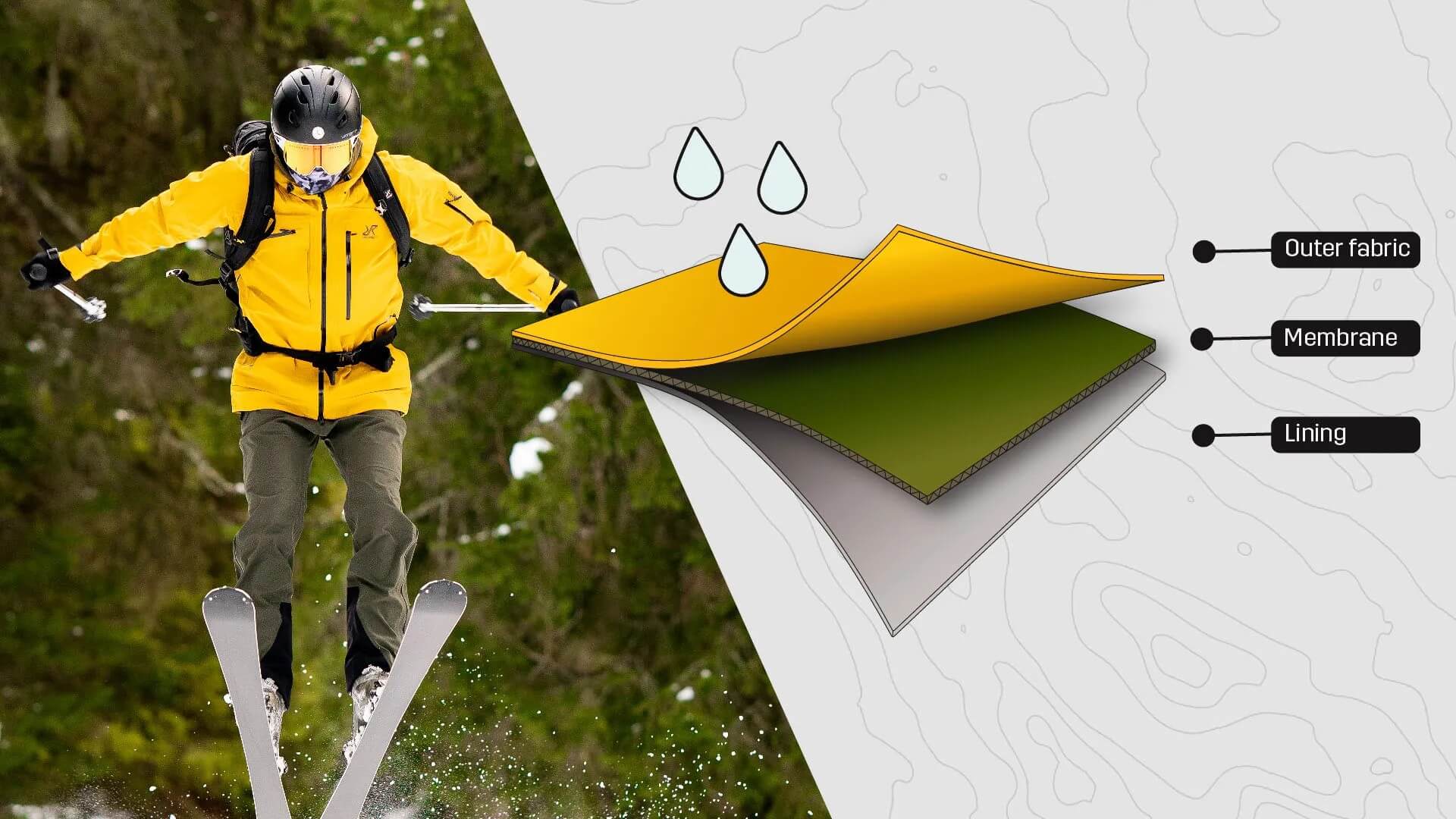
True waterproof fabrics rely on composite waterproof and breathable membranes or high-performance PU coatings , and garment manufacturing must also include the use of seam sealing strips.
- The membrane has pores smaller than liquid water droplets, which can block pressurized rainwater from seeping in, while allowing human sweat and moisture to pass through, ensuring breathability.
- tested by hydrostatic pressure (millimeters of water column) ; the higher the value, the stronger the waterproof capability.
- Waterproof performance is determined by the quality of the membrane/coating, not by the surface treatment process.
2.Comparison of Key Performance and Testing Standards
|
Item |
Water-repellent |
Waterproof |
|
Core Principles |
DWR surface chemical treatment, no internal film layer |
Composite waterproof and breathable membrane / PU waterproof coating |
|
Main test standards |
AATCC-22 Spray Test (Levels 1-5) |
Hydrostatic pressure test (mm water column) |
|
Performance indicators |
Spraying rating 3-5 is considered excellent. |
Common specifications: 5000mm / 10000mm / 20000mm water column |
|
Resisting continuous heavy rain |
❌Not applicable |
✅ ≥5000mm hydrostatic pressure can withstand heavy rain. |
|
Durability |
Damage caused by water washing and friction can be repaired with a spray. |
Stable performance depends on the quality of the coating and lamination processes. |
|
breathability |
High, retaining the original breathability of the fabric. |
Depending on the grade of the waterproof membrane |
3.Applicable Scenarios
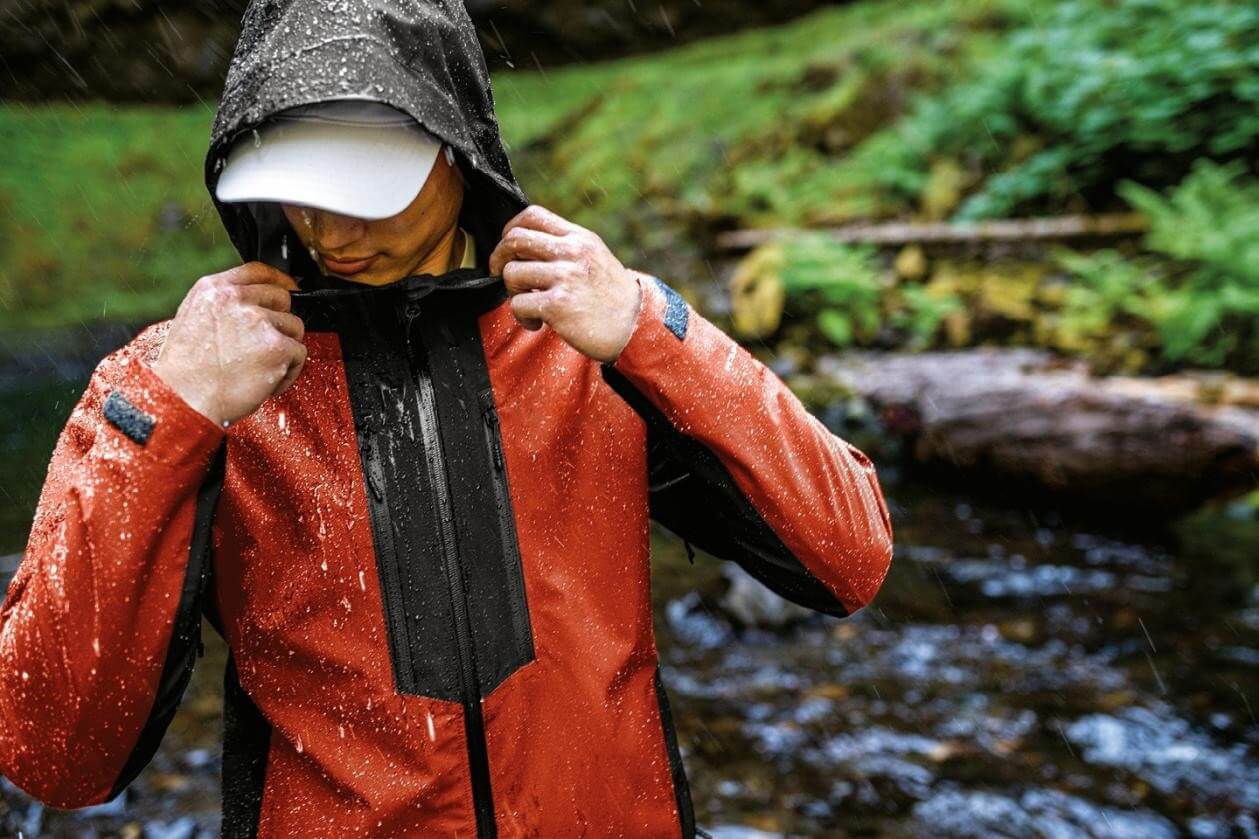
3.1 Applicable Scenarios for Water-Repellent Fabric
- Urban casual softshell jackets and trench coats;
- Short, light hikes are recommended to cope with occasional light rain.
- Backpacks, sportswear, and hat materials are used to protect against dew and splashes.
- Prioritize clothing that is highly breathable and does not require prolonged protection from heavy rain.
Limitations: Not suitable for high-altitude hiking or prolonged outdoor heavy rain environments.
3.2 Applicable Scenarios for Waterproof Fabrics
- Hard-shell jackets for mountaineering, long-distance hiking, and expeditions;
- Work raincoats, fishing suits, outdoor emergency protective equipment;
- Products that need to withstand prolonged rain and water pressure.
Important reminder: Even if the fabric itself is waterproof, if the seams of the garment are not sealed with tape, water will still leak at the seams, and the waterproof performance of the finished product will be completely lost.
4.Common Misconceptions in Procurement
Myth 1: Water droplets rolling off the fabric surface = Waterproof fabric
Water droplets rolling off are mostly due to the DWR (Dry WR) water-repellent treatment. Once the DWR ages, or is subjected to heavy rain and pressure, water will seep into the fabric. Seeing water droplets on a lotus leaf shape does not prove that the fabric is waterproof. For waterproof projects, always request a hydrostatic pressure test report.
Myth 2: Waterproof performance will never decline.
For coated waterproof fabrics, there is a risk of the membrane layer peeling off if washed at high temperatures or with strong alkaline detergents. It is essential to strictly follow the fabric washing and care instructions.
Myth 3: Applying DWR treatment to fabric will change it from water-repellent to waterproof.
DWR is merely a surface finishing process and cannot provide hydrostatic resistance. Adding a water-repellent coating does not upgrade ordinary water-repellent fabric into a truly waterproof fabric.
5.Practical Suggestions for Apparel Brand Procurement
- First, determine the actual usage environment of the product and confirm whether the finished product needs to withstand prolonged heavy rain.
- If purchasing waterproof fabric: be sure to specify the hydrostatic pressure index in the technical sheet and request a third-party hydrostatic pressure test report from the supplier;
- If purchasing water-repellent fabric: specify the AATCC-22 spray rating and the water-repellent durability requirements after washing;
- A reminder to garment factories: Waterproof fabric alone is far from enough; garments must undergo a seam sealing process to achieve waterproofing in the finished product.
Contact Us | Get Functional Fabric Support
If you are sourcing water-repellent or waterproof functional fabrics for your outdoor apparel project, please contact [email protected](https://www.youvion.com) for professional technical advice and fabric samples.
Our product line includes DWR water-repellent softshell fabrics, as well as multi-grade composite waterproof and breathable fabrics. Please tell us your performance requirements and product usage scenarios, and our technical team can recommend suitable fabric solutions for your new product series.
