

Are you looking for common swimwear fabrics?
1. Common Swimwear Fabrics
In the blazing summer, it’s the season for swimwear to shine. So, what are the most commonly used fabrics for swimwear, and how should you select and care for them?
1.1 Lycra (DuPont Lycra):
Lycra is a type of synthetic elastic fiber known for its exceptional elasticity, extending up to 4-6 times its original length. It is highly versatile and can be blended with various fibers to enhance properties like drape and wrinkle resistance. Lycra with chlorine resistance will give swimwear a longer lifespan compared to standard materials.
1.2 Nylon (Nylon Fabric):
Though not as solid as Lycra, nylon offers comparable elasticity and softness. It is currently one of the most commonly used materials for swimwear, suitable for mid-range priced products.
1.3 Polyester (Polyester Fabric):
Polyester is a one-way or two-way stretch fabric. Due to its limited elasticity, it is mostly used in swim trunks or women's two-piece swimsuits, rather than one-piece designs. It is often employed in partial panels or low-cost strategies.
2. Swimwear Categories
2.1 Women's Swimwear:
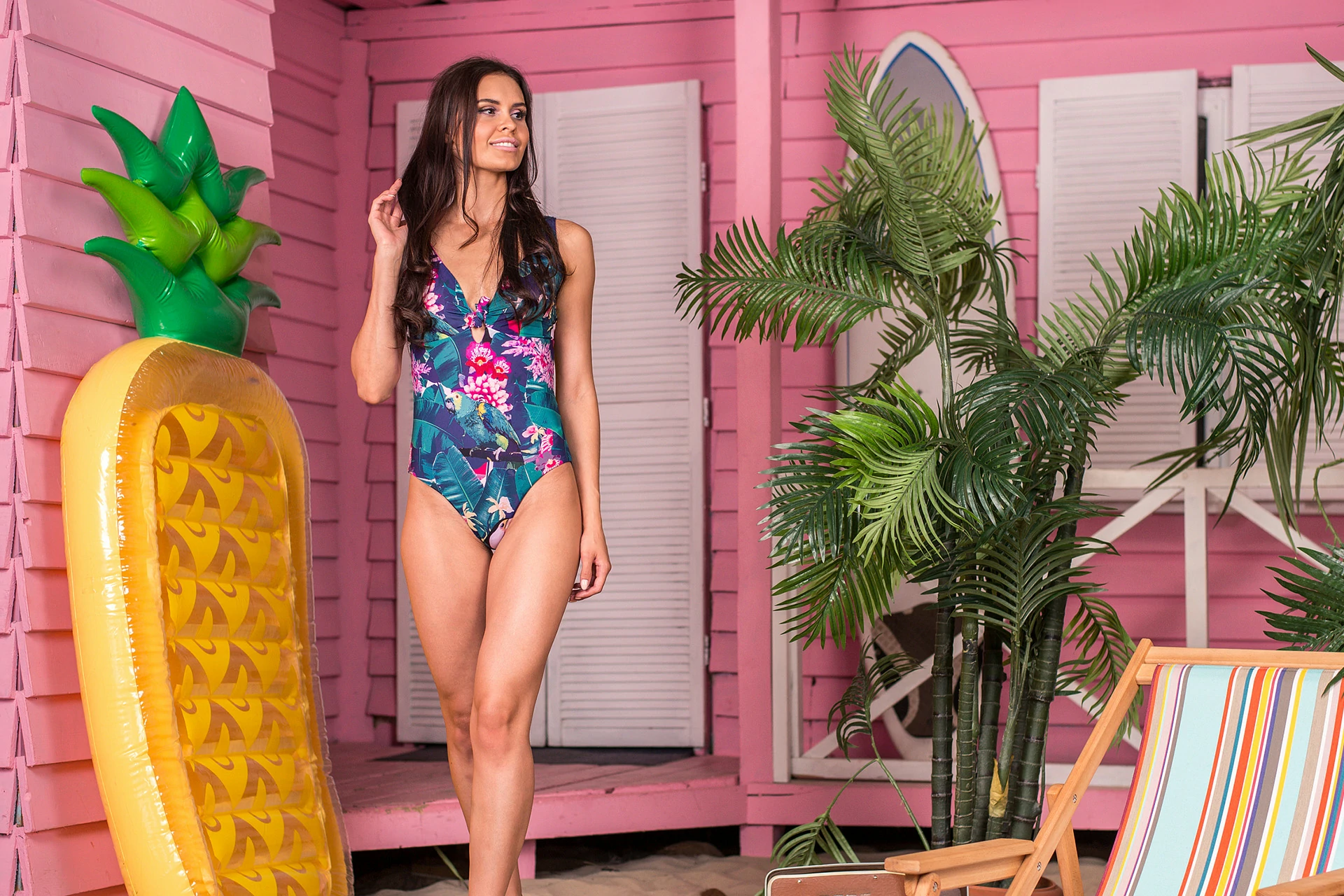
Generally categorized into one-piece triangle, one-piece square, two-piece, three-piece, and dress styles. Trendy designs might also include four-piece sets or other unique styles.
2.2 Men's Swim Trunks:
Commonly divided into "briefs," "boxer briefs," "trunks," "board shorts," "biker shorts," and "beach shorts." Occasionally, one-piece suits and wetsuits are also used.
2.3 Girls' Swimwear:
Similar to women's swimwear, categorized into "one-piece," "one-piece with shorts," "two-piece," "three-piece," and "dress" styles.
2.4 Boys' Swim Trunks:
Similar to men's swim trunks, categorized into "briefs," "boxer briefs," "trunks," "board shorts," "biker shorts," and "one-piece suits."
3. Swimwear Washing and Maintenance
3.1 Washing Swimwear:
Most swimwear should be hand-washed in cold water (no more than 30°C) and air-dried. Avoid using soap or laundry detergents as they often contain bleaching agents or fluorescent additives that can damage the color and elasticity of the swimwear.
3.2 Maintaining Swimwear:
To extend the lifespan of your swimwear, proper care is essential:
- A. Salt from seawater, chlorine in pools, chemicals, and oils can damage swimwear elasticity. Apply sunscreen before putting on your swimwear. Rinse the swimwear with fresh water before getting into the water to reduce damage. After swimming, rinse your body before removing the swimwear.
- B. Avoid leaving wet swimwear in a bag for extended periods to prevent heat damage, fading, or odor. Rinse promptly in fresh water, gently squeeze out excess water with a towel, and dry in a shaded area away from direct sunlight.
- C. Do not machine wash, spin dry, or sun dry swimwear, and avoid using a dryer, as these can damage the material and cause deformation.
- D. Avoid using laundry detergents or bleach, as they can degrade elasticity.
- E. Avoid rubbing swimwear against rough surfaces like rocks to prevent wear and tear.
- F. Note: Wearing swimwear in hot springs or saunas can damage the elasticity of the fabric due to sulfur and high temperatures, shortening the lifespan of your swimwear.


Related Post


How to Choose the Right Midlayer Fabric for Outdoor Apparel
Layne | 10-20-2026 | Views 80 times
How to Choose the Right Midlayer Fabric for Outdoor Apparel Choosing the right midlayer fabric is essential for developing functional outdoor apparel. A good midlayer should provide warmth without unnecessary bulk while maintaining breathability, moisture management, comf...

A Complete Analysis of Waterproof Fabrics
Layne | 09-24-2026 | Views 272 times
A Complete Analysis of Waterproof Fabrics: From Principles to Processes, Understand Waterproof Ratings in One Go Foreword: How can a piece of fabric be made “not a drop of water leak-proof”? Whether a jacket can truly keep out the rain depends not on how thick it...
Waterproof vs. Water-repellent: Fabric differences that 90% of people get wrong
Layne | 09-22-2026 | Views 231 times
Waterproof vs. Water-repellent: Fabric differences that 90% of people get wrong About the author Youvion focuses on developing functional fabrics for outdoor apparel, covering solutions for inner, middle, and hardshell outer layers. Through years of collaboration with global...
Recycled Polyester (rPET): What It Is, How It’s Made, and Why It Matters for Outdoor Fabrics
Layne | 09-14-2026 | Views 423 times
Recycled Polyester (rPET): What It Is, How It’s Made, and Why It Matters for Outdoor Fabrics Recycled polyester (rPET) is widely used in modern textile production. It offers many of the performance characteristics of conventional polyester, including strength, abrasion re...

Superwash Wool vs Natural Wool
Layne | 09-11-2026 | Views 381 times
Superwash Wool vs Natural Wool 1.What’s “Superwash” Merino wool is a high-performance fiber bestowed by nature—it’s breathable, temperature regulating, naturally odor-resistant, and can absorb up to 35% of its own weight in moisture without feeling damp. However, for d...

Sorona® Fabric: A Sustainable Bio-Based Textile Material Combining Performance, Comfort, and Innovation
Layne | 09-10-2026 | Views 487 times
Sorona® Fabric: A Sustainable Bio-Based Textile Material Combining Performance, Comfort, and Innovation 1.What Is Sorona® Fabric? Sorona® is a bio-based functional textile material developed from advanced polymer technology. It is a PTT (polytrimethylene terephthalate) fiber...
Send Your Inquiry
Get a quote within 24 hours