

Easy Methods to Tell Apart Knit and Woven Fabrics
1. How can we tell apart knit and woven fabric?
When it comes to fabrics, distinguishing between knits and woven materials may seem challenging at first glance. However, with a few simple methods, you can easily identify whether a fabric is knit or woven.
A. Visual Examination
Fabrics are named according to the method used to create them, which is visible upon close inspection.
Woven Fabrics: These are crafted by interlacing yarns in a criss-cross pattern, akin to traditional weaving techniques used for centuries. Imagine the intricate overlap seen in screen doors or tennis racket nets, but tightly woven to form a solid fabric.
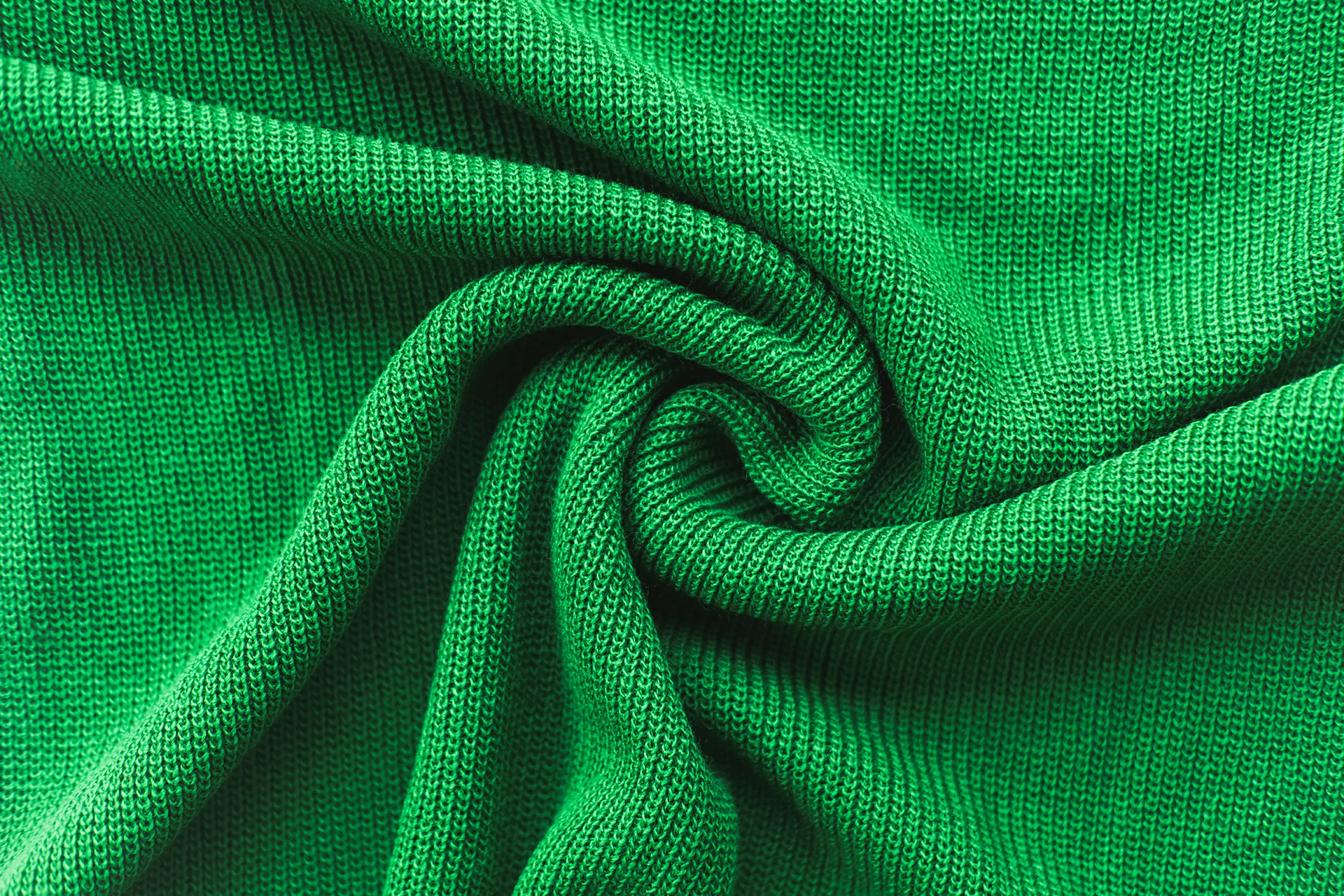
Knit Fabrics: Knits are categorized into weft knits and warp knits. Weft knits, like hand-knitted sweaters, feature a distinctive V-shaped pattern in their weave. In contrast, warp knits display a more complex pattern, often resembling stripes.
B. Thread Pulling Test
To further differentiate between knit and woven fabrics, try pulling at the threads along the fabric's edge.
Woven Fabrics: Threads in woven fabrics are easily pulled out from the edges due to their straightforward interlacing. This characteristic makes woven fabrics unravel relatively easily.
Knit fabrics differ in thread pullability: weft knits allow thread pulling, albeit more difficult due to interwoven nature, while warp knits securely anchor threads, making hand pulling nearly impossible.
C. Elasticity Test
Elasticity is another key factor that distinguishes knit from woven fabrics.
Woven Fabrics: Typically, woven fabrics have minimal elasticity. The tightly packed criss-cross pattern restricts stretchiness.
Knit fabrics vary in elasticity: weft knits stretch noticeably due to interwoven threads, while warp knits' elasticity hinges on the inclusion of elastic fibers, otherwise resembling woven fabrics in stretchability.
2. Summary
These simple methods—visual examination, thread pulling, and elasticity testing—provide practical ways to identify knit and woven fabrics accurately. Whether you're a consumer or designer, understanding these distinctions enhances your ability to choose fabrics suited to your needs.
By mastering these techniques, you'll confidently navigate the world of fabrics, appreciating their diverse characteristics and applications.


Related Post

Why Today’s Eco-Conscious Shoppers Are Choosing Safer, Greener Textiles
Layne | 08-18-2026 | Views 124 times
PFAS-Free & PFC-Free: Why Today’s Eco-Conscious Shoppers Are Choosing Safer, Greener Textiles 1.Introduction: The New Standard in Sustainability Sustainability isn’t just a trend anymore—it’s the new standard. Across the globe, consumers are rethinking ...
The Ultimate Base Layer Guide for Outdoor Performance
Layne | 08-12-2026 | Views 114 times
The Ultimate Base Layer Guide for Outdoor Performance 1.Introduction Choosing the right layers when on the slopes or taking part in any outdoor activity is crucial. A base layer is necessary for maintaining the right body temperature and will wick away moisture (often caused...
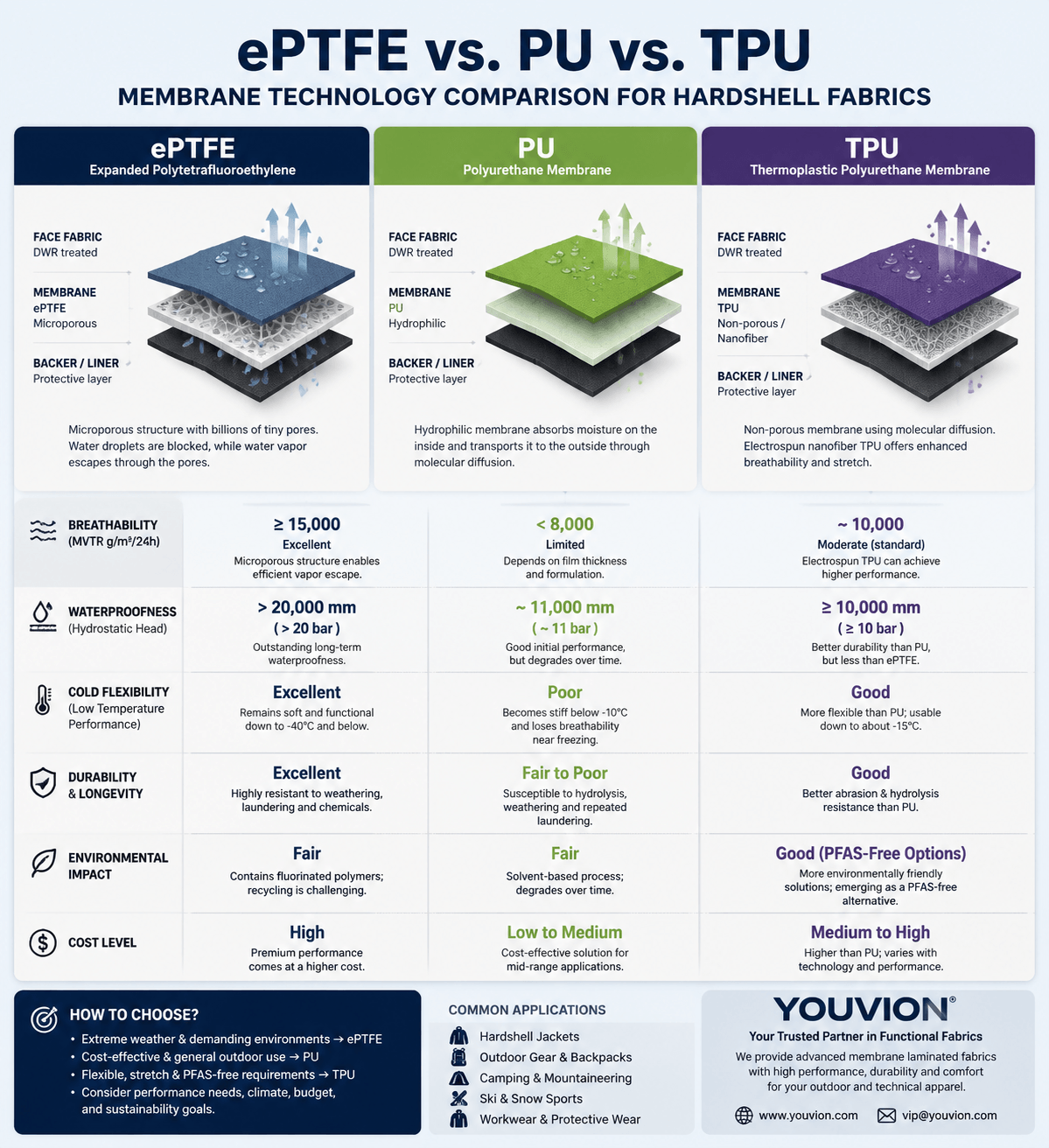
ePTFE vs. PU vs. TPU Membranes: A Technical Guide for Hardshell Fabrics
Layne | 08-09-2026 | Views 154 times
ePTFE vs. PU vs. TPU Membranes: A Technical Guide for Hardshell Fabrics 1.Introduction: The Critical Role of Membranes in Hardshell Performance 1.1 Defining the Hardshell Application Hardshell jackets represent the pinnacle of outdoor protective apparel, engineered to per...

Hiking 101: Essential Tips for a Safe and Memorable Trail Experience
Layne | 08-07-2026 | Views 139 times
Hiking 101: Essential Tips for a Safe and Memorable Trail Experience Hiking offers one of the most accessible and rewarding ways to connect with nature. Whether you are chasing panoramic summit views, seeking mental clarity, or simply craving an escape from daily routines, ...

Hard Shell vs Soft Shell Jacket: Answer These 7 Questions Before You Buy
Layne | 08-04-2026 | Views 276 times
Hard Shell vs. Soft Shell Jacket: Answer These 7 Questions Before You Buy The One-Sentence Rule You Can Use Right Now: If you’re going somewhere where more than 20 minutes of rain would ruin your day → get a hard shell. If you’re doing something that makes you...

Beyond the Surface: 5 Key Directions in High-Performance Outdoor Fabrics for 2026 and Beyond
Layne | 07-24-2026 | Views 483 times
5 Key Directions in High-Performance Outdoor Fabrics for 2026 and Beyond The outdoor apparel industry is in the midst of a material revolution. Today’s consumers demand more than just weather protection—they seek clothing that disappears on the body, int...
Send Your Inquiry
Get a quote within 24 hours