
Hard Shell vs. Soft Shell Jacket: Answer These 7 Questions Before You Buy
The One-Sentence Rule You Can Use Right Now:
If you're going somewhere where more than 20 minutes of rain would ruin your day → get a hard shell.
If you're doing something that makes your back sweat through your base layer within 15 minutes → get a soft shell.
If you're not sure about either → buy a hard shell first and adjust warmth with mid layers. That's the lowest-risk move.
No fluff. Let's walk through 7 questions that will tell you exactly which shell you need.

1.Question 1: What's Your Biggest Fear on the Trail?
|
Your Biggest Worry |
Your Answer |
|
Getting soaked to the bone and shivering in cold wind |
Hard shell. Non-negotiable. |
|
Overheating, feeling clammy, and fighting your jacket's stiffness |
Soft shell. You'll thank yourself later. |
This isn't marketing talk. A hard shell is wearable shelter. A soft shell is a wind-resistant sweatshirt with attitude. They're built for completely different moments.
2.Question 2: What Activity Are You Actually Doing?
Different activities demand different shells. Here's the real-world breakdown:
Grab a Hard Shell If You're Doing These (No Compromise)
- High-altitude climbing / ice climbing — weather shifts in minutes; wind often exceeds 40 km/h
- Multi-day backpacking in unpredictable climates — you can't gamble on 3 days of dry weather
- Skiing in wet or windy conditions — chairlifts amplify wind chill dramatically
- Urban commuting on rainy days — especially if you wait more than 15 minutes for public transport
Grab a Soft Shell If You're Doing These
- Trail running or fast hiking — you'll generate too much heat for a hard shell
- Rock climbing or bouldering — freedom of movement matters more than storm protection
- Spring ski touring — the uphill effort will cook you inside a waterproof layer
- Dry, cool-weather walks — light wind resistance is all you need

3.Question 3: How Much Rain Are You Really Going to See?
Let's be honest about your actual conditions:
| Rainfall Scenario | What Works |
| Sustained rain > 1 hour | Hard shell only. Period. |
| Intermittent drizzle < 30 minutes total | Soft shell can handle this. |
| "I might get caught in a shower once a week" | Hard shell (packable version) — carry it, don't wear it all day |
| "I rarely see rain but it's windy" | Soft shell with good wind resistance, or a dedicated windbreaker |
The technical number to remember: Hard shells typically have a waterproof rating of ≥15,000mm (hydrostatic head). Soft shells usually sit below 5,000mm — that's water-resistant, not waterproof.
4.Question 4: How Much Do You Sweat?
This is the single most overlooked factor.
- If you run hot (you're the person who wears shorts in 10°C weather): a hard shell will turn into a plastic bag on you within 20 minutes of exertion. Go soft shell.
- If you run cold (you're layering up when others are in T-shirts): a hard shell's trapped heat might actually work in your favor — you can vent with pit zips.
Real talk: For high-output activities in temperatures above 5°C, a soft shell is almost always more comfortable. For low-output activities (standing, slow walking) in cold rain, a hard shell keeps you alive.
5.Question 5: Do You Value One Jacket That Does Everything, or Two That Do One Thing Well?
This is the "versatility vs. specialization" trade-off:
| Your Preference | Recommendation |
| "I want one jacket for 80% of my days" | Soft shell — if you live in a dry climate (e.g., Rocky Mountains, California, inland Australia) |
| "I want a system that covers 100% of conditions" | Hard shell + separate mid layers — covers everything from -10°C to 20°C |
| "I hate carrying extra layers" | Soft shell with light fleece lining — but accept its limits in heavy rain |
| "I hate being cold more than I hate being sweaty" | Hard shell — you can always unzip; you can't magically make a soft shell waterproof |
6.Question 6: How Much Does Mobility Matter to You?
Try this quick test at home:
- Reach both arms straight up like you're grabbing a climbing hold.
- Cross your arms in front like you're hugging a ski pole.
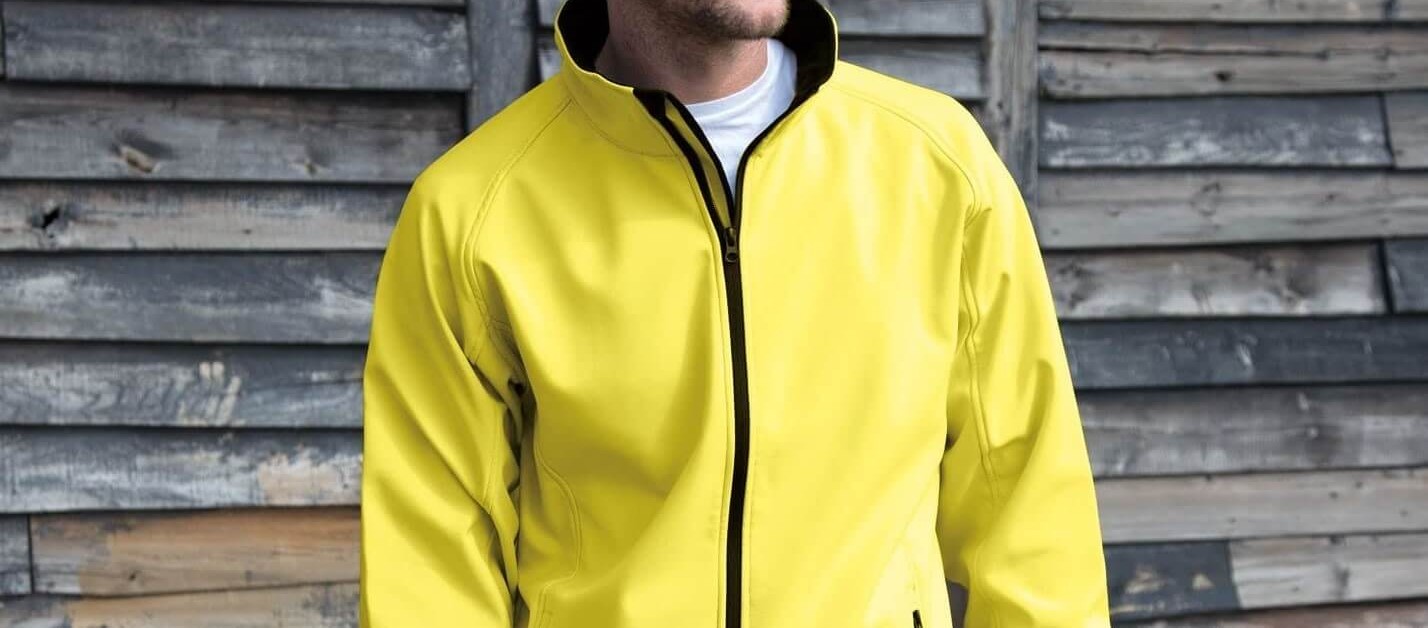
Hard shell: Feels stiff, may pull at the shoulders or hem. Premium models with articulated elbows and stretch fabric help, but they're still stiffer than soft shells.
Soft shell: Moves with you. Most contain 5–15% elastane (spandex) for 4-way stretch. You'll forget you're wearing it.
The honest take: If your activity requires constant overhead reaching (climbing, skiing, backpack adjustment), a soft shell wins on mobility. If you're mostly walking upright, the difference is less noticeable.
7.Question 7: What's Your Layering Strategy?
This is where most people get it wrong:
With a Hard Shell (The Modular Approach)
- Shell itself provides zero warmth.
- You add a fleece (light warmth), a synthetic puffy (warm even when damp), or a down jacket (maximum warmth-to-weight) underneath.
- This system works from -15°C to 15°C — you just swap midlayers.
| If This Sounds Like You | Your Shell |
| "I'm climbing a 4,000m peak in the Alps" | Hard Shell |
| "I'm trail running in the Scottish Highlands on a dry day" | Soft Shell |
| "I commute by bike in Vancouver" | Hard Shell (packable) |
| "I hike the Arizona desert in winter" | Soft Shell |
| "I ski in the Rockies — both resort and backcountry" | Both (hard shell for storm days, soft shell for spring touring) |
| "I want one jacket for dog walks and light hiking" | Soft Shell |
| "I need a jacket for Iceland in October" | Hard Shell |
With a Soft Shell (The All-in-One Approach)
- The brushed fleece backing adds light insulation — good for about 5°C to 15°C as a single layer.
- Below 5°C, you'll need a mid layer underneath anyway.
- Above 15°C, you'll overheat unless the soft shell is unlined.
Bottom line: A hard shell is a platform for a layering system. A soft shell is a fixed setup — convenient but less flexible across seasons.
8.Quick Reference: Decision Matrix
Frequently Asked Questions (Real Questions from Real Buyers)
Q: Can I just spray DWR on my soft shell and make it waterproof?
A: No. DWR makes water bead up and roll off, but it doesn't seal the fabric. Once the DWR wears off (usually after 5–10 washes), water penetrates. A soft shell lacks a waterproof membrane and taped seam construction.
Q: Which one is quieter?
A: Soft shell, by a mile. Hard shells make that classic "swish-swish" sound when you walk. If you care about noise (hunting, wildlife photography), soft shell is the obvious choice.
Q: Which one is more durable?
A: Hard shell fabrics (especially 3-layer constructions) are generally more abrasion-resistant. But if you tear a soft shell, it's less catastrophic — you're not losing waterproofing anyway.
Q: Do I really need to spend $500+ on a hard shell?
A: No. Entry-level hard shells around **$150–$250 offer solid protection. The premium price gets you better breathability, lighter weight, and more durable DWR. If you use it twice a year, go entry-level. If you live in it, invest.
Q: Can a hard shell be comfortable for everyday city wear?
A: Yes, but it's often overkill. The fabric is stiff, the hood is helmet-compatible (huge), and the pockets are positioned for climbing harnesses, not everyday use. A soft shell or a dedicated urban rain jacket is more practical for daily life.
9.Final Decision Flowchart (If You Only Read One Section, Read This)
Step 1: Will you be in heavy rain for more than 30 minutes at a time?
→ Yes = Hard Shell. Go to Step 4.
→ No = Go to Step 2.
Step 2: Will you be sweating heavily (running, climbing, touring)?
→ Yes = Soft Shell. Done.
→ No = Go to Step 3.
Step 3: Do you already own a good mid layer (fleece or puffy)?
→ Yes = Hard Shell (packable) — you can layer for warmth.
→ No = Soft Shell — it gives you some insulation out of the box.
Step 4 (Hard Shell owners): Add mid layers based on temperature.
- Above 10°C → just a base layer.
- 0°C to 10°C → add a fleece.
- Below 0°C → add a puffy or down jacket underneath.
10.One Last Piece of Honest Advice
Most people who buy a hard shell don't wear it 80% of the time. They carry it in their pack and pull it out when the sky opens up. That's exactly how it should be used.
Most people who buy a soft shell wear it every single day — from morning coffee to afternoon hike — until it starts drizzling, and then they wish they'd brought the hard shell.
If you can afford both: buy a soft shell for 80% of your days + a lightweight packable hard shell for the other 20%.
If you can only afford one: buy the hard shell. You can always leave it unzipped or take it off. You can't make a soft shell waterproof when you need it most.

11.Recommended Product Categories (Not Specific Models)
- For storm-proof hard shells: look for 3-layer construction, ≥20,000mm waterproof rating, and pit zips. Gore‑Tex Pro and proprietary equivalents are industry benchmarks.
- For active soft shells: look for 4-way stretch, a brushed interior, and a DWR-treated face (to handle light drizzle).
- For city use: a soft shell with clean lines and a quiet fabric will serve you better than a neon alpine shell.
At Youvion, we engineer high-performance functional fabrics that perform where it matters—whether in outdoor clothing, backpacks, camping tents, or tactical gear. Our full-range offering includes waterproof, windproof, breathable, abrasion-resistant, ripstop, UV-blocking, and flame-retardant solutions. And we don't just sell fabric; we partner with you through OEM & ODM custom development, managing everything from initial polymer formulation and weaving to advanced coating, lamination, and finished-goods delivery.
For more detailed specifications, customization options, or to discuss your next project with our technical team, please don't hesitate to contact us directly: [email protected]
