

Single Jersey Fabric & Double-Sided Fabric

1. What Is Single Jersey?
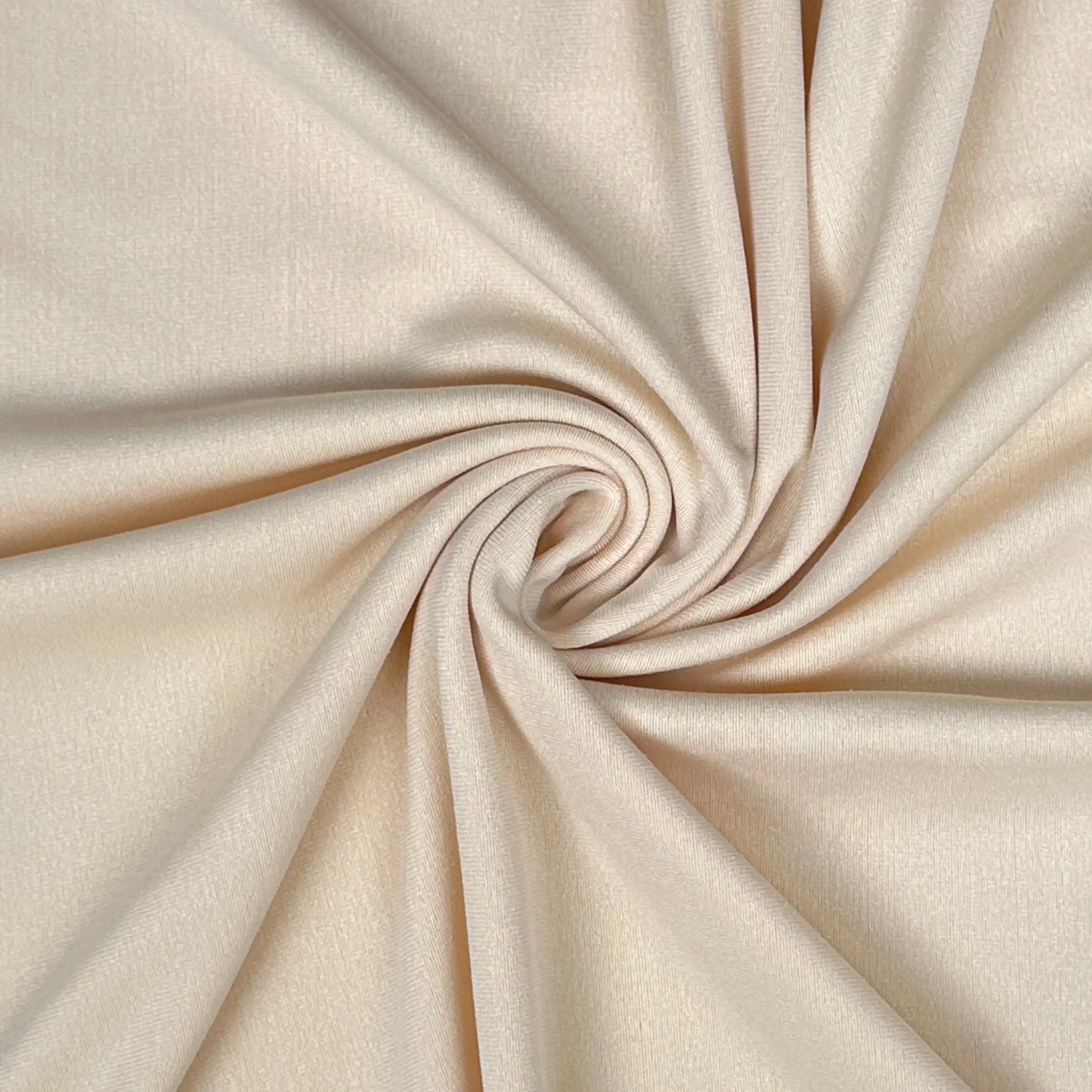
Single Jersey Fabric is a type of circular knitted fabric (Weft Knit). The knitting machine for single jersey fabric has only one row of needles, while the knitting machine for double jersey fabric has two rows of needles. This makes the fabric feel like it has only one layer when woven (much like basic knitting yarn), and the textures on both sides are different, which is why it is called "single jersey fabric".
Characteristics of single-sided fabric
If you have single-sided fabric in your hand, you can feel the feel of both sides. Usually, the feel of both sides will be slightly different. Single-sided fabric feels softer, lighter, and has more drape than double-sided fabric (if they are of the same specifications). Single-sided fabric is also more breathable than double-sided fabric.
Uses of single-sided fabric
Single-sided fabric can usually be used as T-shirts, sports tops, yoga pants, etc. Because single-sided fabric is more breathable than double-sided fabric, sweat is easier to discharge from the skin.

2. Double-Sided Fabric
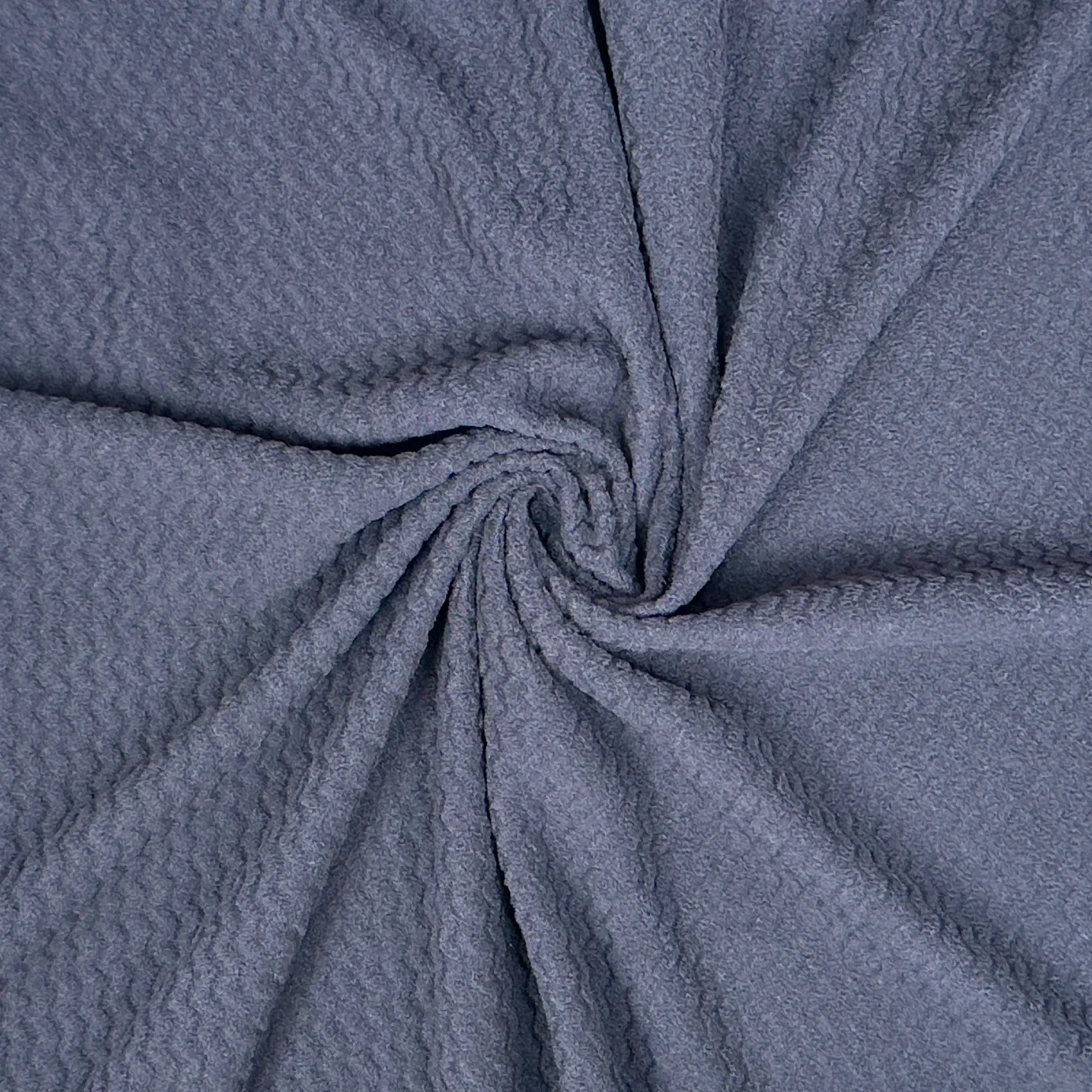
Interlock or double knit is also a type of circular knit fabric (Weft Knit). The interlock knitting machine has two rows of needles, and the fabric is like weaving the backs of two single-sided fabrics together. There are many types of interlock fabrics, such as rib fabric, PK fabric, health fabric, etc. But if it is a flat double-sided fabric, the weave on both sides of the fabric will be the same, so it is called "interlock fabric".
Characteristics of double-sided fabric
Compared with single-sided fabric, double-sided fabric is usually thicker, heavier, and stiffer (if it is of the same specifications), but it is less breathable than single-sided fabric.
Uses of double-sided fabric
Double-sided fabric can be used as trousers, skirts, opaque sports tights, polo shirts, etc. It has a wide range of uses, and the clothes made are usually stiffer.

3. How To Distinguish Single-Sided Fabric From Double-Sided Fabric?
If you look closely at the weave of a plain single-sided fabric, you will find that the weave on both sides is different. On the contrary, the two sides of a double-sided fabric look the same. However, the above method can only be used for plain single-sided and double-sided fabrics. If it is a woven fabric, please use the second method: stretch the fabric to observe the curling of the fabric edge.
Put your fabric straight (the weave is perpendicular to you), then pull the left and right edges of the fabric to see if the fabric edge parallel to you curls. If there is curling, it is a single-sided fabric, and if there is no curling, it is a double-sided fabric. This is why double-sided fabric is often used for laser cutting or seamless cutting of underwear.


Related Post


How to Choose the Right Midlayer Fabric for Outdoor Apparel
Layne | 10-20-2026 | Views 83 times
How to Choose the Right Midlayer Fabric for Outdoor Apparel Choosing the right midlayer fabric is essential for developing functional outdoor apparel. A good midlayer should provide warmth without unnecessary bulk while maintaining breathability, moisture management, comf...

A Complete Analysis of Waterproof Fabrics
Layne | 09-24-2026 | Views 279 times
A Complete Analysis of Waterproof Fabrics: From Principles to Processes, Understand Waterproof Ratings in One Go Foreword: How can a piece of fabric be made “not a drop of water leak-proof”? Whether a jacket can truly keep out the rain depends not on how thick it...
Waterproof vs. Water-repellent: Fabric differences that 90% of people get wrong
Layne | 09-22-2026 | Views 233 times
Waterproof vs. Water-repellent: Fabric differences that 90% of people get wrong About the author Youvion focuses on developing functional fabrics for outdoor apparel, covering solutions for inner, middle, and hardshell outer layers. Through years of collaboration with global...
Recycled Polyester (rPET): What It Is, How It’s Made, and Why It Matters for Outdoor Fabrics
Layne | 09-14-2026 | Views 430 times
Recycled Polyester (rPET): What It Is, How It’s Made, and Why It Matters for Outdoor Fabrics Recycled polyester (rPET) is widely used in modern textile production. It offers many of the performance characteristics of conventional polyester, including strength, abrasion re...

Superwash Wool vs Natural Wool
Layne | 09-11-2026 | Views 393 times
Superwash Wool vs Natural Wool 1.What’s “Superwash” Merino wool is a high-performance fiber bestowed by nature—it’s breathable, temperature regulating, naturally odor-resistant, and can absorb up to 35% of its own weight in moisture without feeling damp. However, for d...

Sorona® Fabric: A Sustainable Bio-Based Textile Material Combining Performance, Comfort, and Innovation
Layne | 09-10-2026 | Views 507 times
Sorona® Fabric: A Sustainable Bio-Based Textile Material Combining Performance, Comfort, and Innovation 1.What Is Sorona® Fabric? Sorona® is a bio-based functional textile material developed from advanced polymer technology. It is a PTT (polytrimethylene terephthalate) fiber...
Send Your Inquiry
Get a quote within 24 hours