

Unveiling the Science of Cooling Fabrics: Enhancing Comfort Through Innovative Design

1. The Theory Behind Cool
When we talk about "cool" fabrics, it's easy to jump to the conclusion that these textiles act like portable air conditioners, constantly keeping us chilled. However, the reality is far more nuanced. Coolness in fabrics isn't just about immediate sensations (contact cooling); it involves a complex interplay of factors that enhance comfort and manage temperature effectively.
Feeling cool isn't just about perception; it's a physiological response where our body temperature decreases. But how does fabric influence this process?
The human body dissipates heat through several mechanisms: radiation, convection, conduction, and evaporation.
Thermal conductivity: Different materials conduct heat differently. Fabrics with high thermal conductivity can impart a cooling sensation, whereas those with low conductivity may feel warmer.
Thermal convection: This refers to the transfer of heat from one place to another via fluid movement. For instance, when you wear a feather jacket, initially, it feels cool because your body's heat transfers to the cooler fabric.
Cooling through evaporation: Sweat evaporation plays a crucial role in heat dissipation. Fabrics that allow moisture to evaporate quickly help in keeping the body cool and dry.
Blocking heat sources is one of the simplest ways to stay cool. Clothing acts as a barrier against direct solar radiation, which helps in maintaining lower body temperatures. Research indicates that wearing regular clothing in the sun can lower body temperature compared to being exposed directly to sunlight. Schoeller's Coldblack technology exemplifies this principle by reflecting sunlight, thereby preventing body heat accumulation.
Understanding these principles helps in designing fabrics that optimize cooling through radiation, convection, conduction, and evaporation mechanisms.

2. Which Material Offers the Best Cooling Properties?
The effectiveness of a fabric's cooling properties depends on its ability to manage these heat dissipation mechanisms. Here are some materials known for their cooling effects:
Polyester: Known for its low moisture absorption (0.4%), polyester dries quickly, providing a refreshing feel. Fabrics like Coolmax use specially designed yarns with enhanced moisture-wicking properties, promoting faster sweat evaporation and reducing stuffiness.
Nylon: With a higher moisture regain (4%) compared to polyester, nylon has better heat conductivity. While it dries slower than polyester, lightweight nylon fabrics still offer contact cooling sensations indoors.
Rayon: A semi-synthetic fiber made from wood pulp, rayon can be adjusted for varying moisture regain properties, offering a soft touch and cooling capabilities.

3.Materials That Enhance the Cooling Effect
Innovative materials like jade, graphene, and xylitol further enhance fabric cooling:
Jade: Known for its natural cooling properties due to its excellent thermal conductivity, jade-infused fabrics quickly conduct heat away from the body, ideal for indoor environments.
Graphene: Despite its reputation for warmth, graphene's exceptional conductivity can dissipate body heat when incorporated into thin, breathable fabrics, balancing body temperature with the environment.
Xylitol: This material absorbs heat upon contact with moisture (sweat), providing a cooling sensation similar to the effect of xylitol in chewing gum. It can be applied directly to fabrics or added to yarns to enhance cooling properties.
Texture plays a critical role in a fabric's cooling performance. Lighter, less dense weaves or meshes facilitate quicker drying and enhance evaporation, promoting faster cooling through moisture management.
Innovative approaches like body mapping designs and moisture-responsive transformation fibers further optimize cooling by targeting high-sweat areas and improving heat convection.Cooling fabrics offer diverse pathways to achieve comfort and temperature regulation.
By understanding the science behind these materials—thermal conductivity, moisture management, and innovative enhancements like jade and graphene—designers and consumers can make informed choices. Whether for everyday wear or high-performance activewear, choosing fabrics that optimize heat dissipation mechanisms ensures comfort and enhances overall well-being.
Deepening our understanding of cooling fabrics not only improves fabric selection but also enhances design possibilities, paving the way for more comfortable and functional clothing solutions. Embrace the coolness in fabrics and experience comfort like never before!
For all your knitted cooling fabric needs, please don’t hesitate to contact us!


Related Post


Windbreaker vs. Rain Jacket: A Complete Guide to Making the Right Choice
Layne | 08-25-2026 | Views 13 times
Windbreaker vs. Rain Jacket: A Complete Guide to Making the Right Choice 1.Introduction Choosing the right jacket for outdoor activities can be a challenge. Two of the most common options—the windbreaker and the rain jacket—often appear similar at first glance but serve fund...
Why Today’s Eco-Conscious Shoppers Are Choosing Safer, Greener Textiles
Layne | 08-18-2026 | Views 132 times
PFAS-Free & PFC-Free: Why Today’s Eco-Conscious Shoppers Are Choosing Safer, Greener Textiles 1.Introduction: The New Standard in Sustainability Sustainability isn’t just a trend anymore—it’s the new standard. Across the globe, consumers are rethinking ...
The Ultimate Base Layer Guide for Outdoor Performance
Layne | 08-12-2026 | Views 119 times
The Ultimate Base Layer Guide for Outdoor Performance 1.Introduction Choosing the right layers when on the slopes or taking part in any outdoor activity is crucial. A base layer is necessary for maintaining the right body temperature and will wick away moisture (often caused...
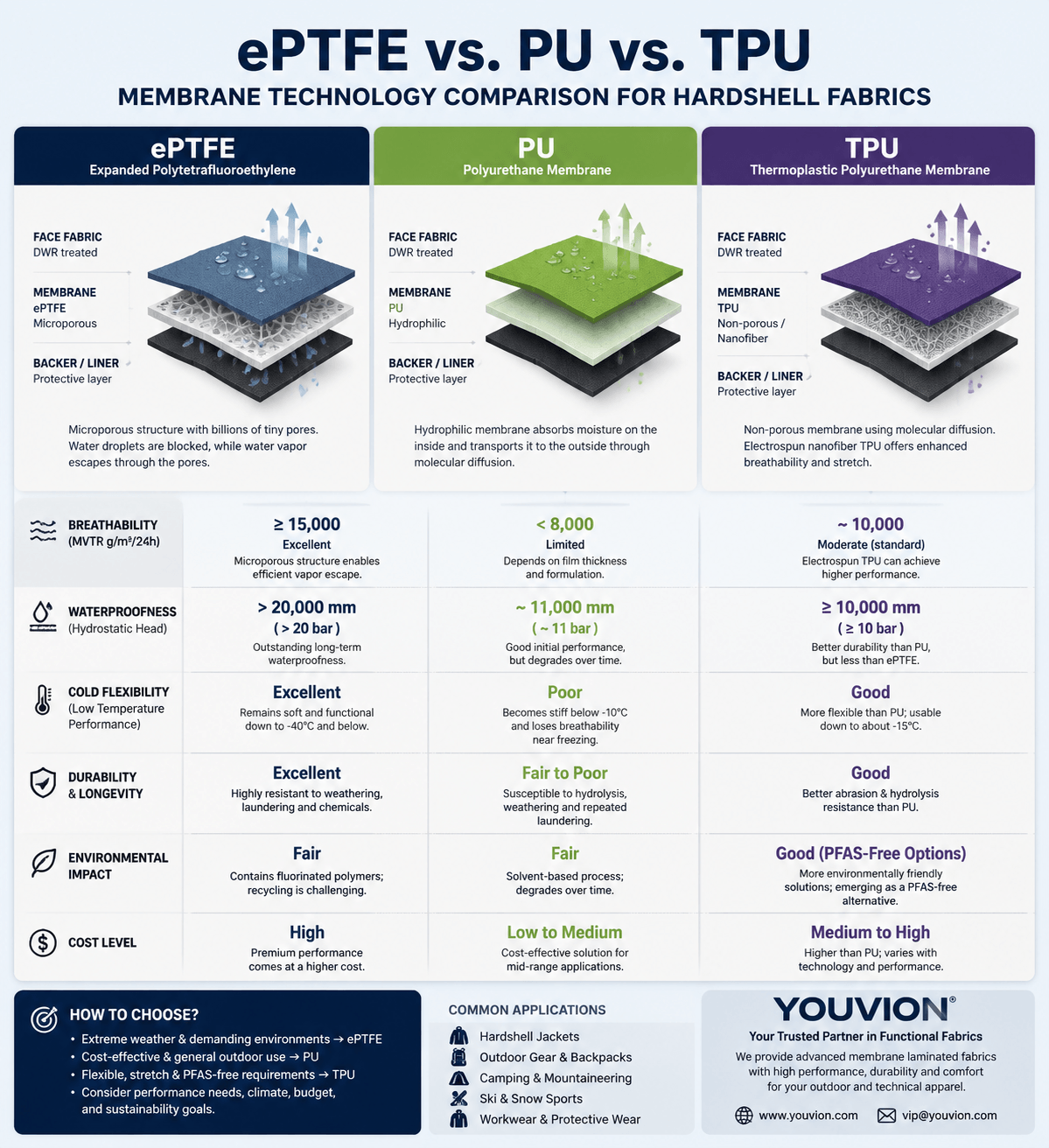
ePTFE vs. PU vs. TPU Membranes: A Technical Guide for Hardshell Fabrics
Layne | 08-09-2026 | Views 159 times
ePTFE vs. PU vs. TPU Membranes: A Technical Guide for Hardshell Fabrics 1.Introduction: The Critical Role of Membranes in Hardshell Performance 1.1 Defining the Hardshell Application Hardshell jackets represent the pinnacle of outdoor protective apparel, engineered to per...

Hiking 101: Essential Tips for a Safe and Memorable Trail Experience
Layne | 08-07-2026 | Views 145 times
Hiking 101: Essential Tips for a Safe and Memorable Trail Experience Hiking offers one of the most accessible and rewarding ways to connect with nature. Whether you are chasing panoramic summit views, seeking mental clarity, or simply craving an escape from daily routines, ...

Hard Shell vs Soft Shell Jacket: Answer These 7 Questions Before You Buy
Layne | 08-04-2026 | Views 284 times
Hard Shell vs. Soft Shell Jacket: Answer These 7 Questions Before You Buy The One-Sentence Rule You Can Use Right Now: If you’re going somewhere where more than 20 minutes of rain would ruin your day → get a hard shell. If you’re doing something that makes you...
Send Your Inquiry
Get a quote within 24 hours