

What Is Fabric Shrinkage
1. About The Fabric Shrinkage
Fabric shrinkage refers to the reduction in size of a fabric or garment after it is subjected to certain conditions, such as washing, drying, or exposure to heat and moisture. This phenomenon occurs due to the relaxation of tensions applied to the fibers during the manufacturing process.
2. Why We Need to Test The Shrinkage of Fabrics?
First, manufacturers need to do shrinkage tests to control the quality of fabrics or clothes, and brands also need to maintain their reputation. Moreover, if the quality is poor, it needs to be remade, which will cause waste of resources and raw materials. Second, if the shrinkage problem of fabrics is not discovered until after the clothes are made, they may become skewed or shrunk after washing. Wrinkles may appear at the seams. The appearance of clothes may also be affected when they are hung or folded. Finally, manufacturers must print correct care labels on clothes to inform consumers how to properly care for clothes. If the shrinkage rate is not tested and the incorrect care label is printed, consumers may damage the clothes by washing them incorrectly.
3. Factors Influencing Fabric Shrinkage
Fiber Content:
Natural fibers like cotton, wool, and linen are more prone to shrinkage compared to synthetic fibers like polyester and nylon.
Blended fabrics may exhibit different shrinkage behaviors depending on the proportion of each fiber type.
Yarn and Fabric Construction:
The way yarns are spun and fabrics are woven or knitted can affect shrinkage.
Tightly woven or knitted fabrics tend to shrink less than loosely constructed ones.
Finishing Processes:
Pre-shrinking treatments (e.g., Sanforization) during manufacturing can reduce shrinkage.
Other finishing processes like mercerization or heat setting can also stabilize the fabric dimensions.
Washing and Drying Conditions:
High temperatures and mechanical agitation during washing and drying can increase shrinkage.
Using hot water, high heat drying, and vigorous agitation are common causes of shrinkage.
4. How to Prevent Fabric From Shrinking?
There are several ways to prevent fabric from shrinking after washing, but they are usually used on cotton fabrics that shrink more. Common treatments include mercerization or shrink-proofing.
Artificial fibers, such as nylon, shrink when exposed to high temperatures, but the shrinkage can be controlled during shaping. However, it is not reasonable to set a completely 0% shrinkage standard. No matter what ingredients are used or what process is used, fabrics usually shrink a little, so an acceptable range should be set. And this range value usually depends on the composition and organization of the fabric.


Related Post


Windbreaker vs. Rain Jacket: A Complete Guide to Making the Right Choice
Layne | 08-25-2026 | Views 19 times
Windbreaker vs. Rain Jacket: A Complete Guide to Making the Right Choice 1.Introduction Choosing the right jacket for outdoor activities can be a challenge. Two of the most common options—the windbreaker and the rain jacket—often appear similar at first glance but serve fund...
Why Today’s Eco-Conscious Shoppers Are Choosing Safer, Greener Textiles
Layne | 08-18-2026 | Views 136 times
PFAS-Free & PFC-Free: Why Today’s Eco-Conscious Shoppers Are Choosing Safer, Greener Textiles 1.Introduction: The New Standard in Sustainability Sustainability isn’t just a trend anymore—it’s the new standard. Across the globe, consumers are rethinking ...
The Ultimate Base Layer Guide for Outdoor Performance
Layne | 08-12-2026 | Views 125 times
The Ultimate Base Layer Guide for Outdoor Performance 1.Introduction Choosing the right layers when on the slopes or taking part in any outdoor activity is crucial. A base layer is necessary for maintaining the right body temperature and will wick away moisture (often caused...
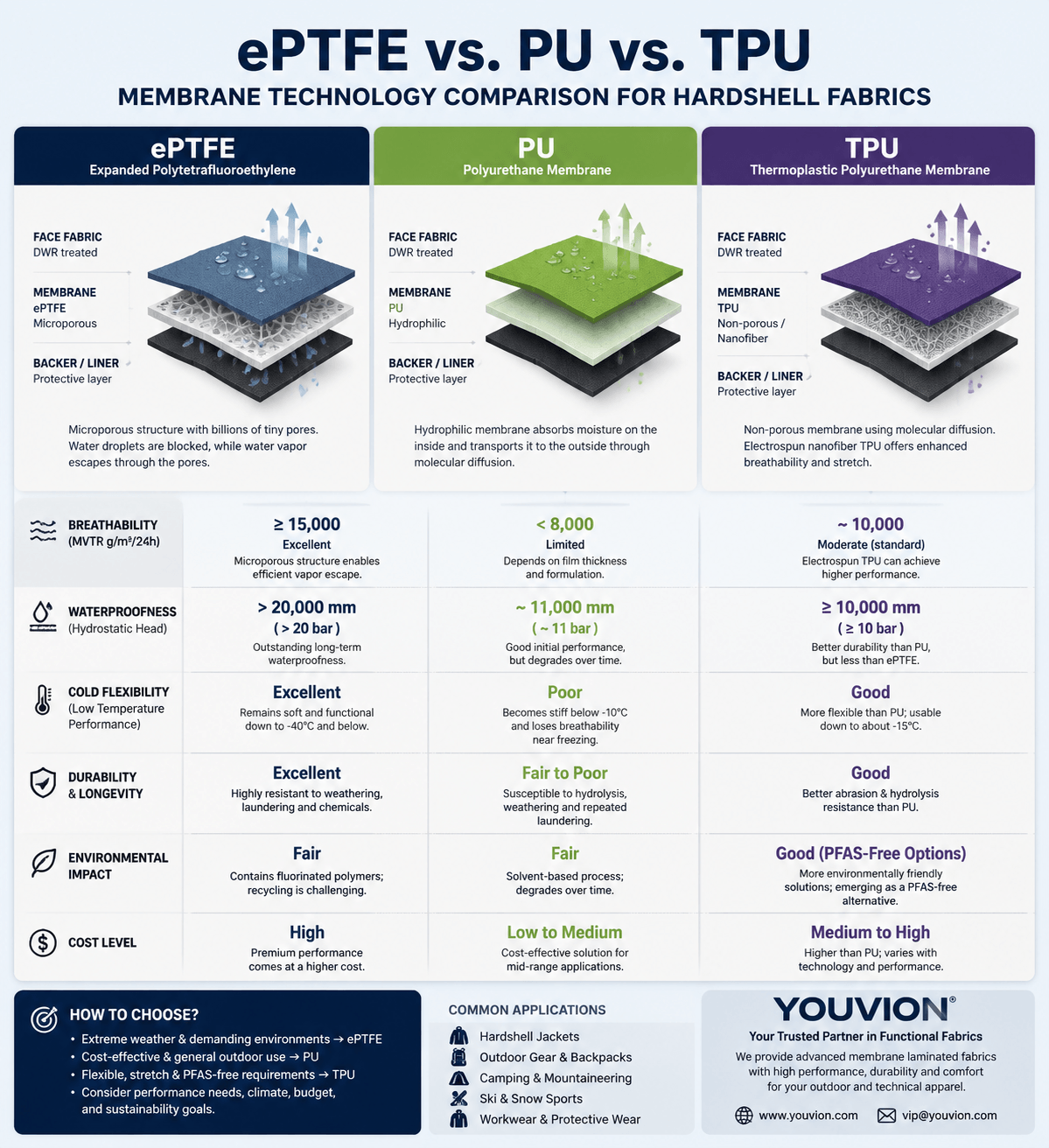
ePTFE vs. PU vs. TPU Membranes: A Technical Guide for Hardshell Fabrics
Layne | 08-09-2026 | Views 165 times
ePTFE vs. PU vs. TPU Membranes: A Technical Guide for Hardshell Fabrics 1.Introduction: The Critical Role of Membranes in Hardshell Performance 1.1 Defining the Hardshell Application Hardshell jackets represent the pinnacle of outdoor protective apparel, engineered to per...

Hiking 101: Essential Tips for a Safe and Memorable Trail Experience
Layne | 08-07-2026 | Views 151 times
Hiking 101: Essential Tips for a Safe and Memorable Trail Experience Hiking offers one of the most accessible and rewarding ways to connect with nature. Whether you are chasing panoramic summit views, seeking mental clarity, or simply craving an escape from daily routines, ...

Hard Shell vs Soft Shell Jacket: Answer These 7 Questions Before You Buy
Layne | 08-04-2026 | Views 286 times
Hard Shell vs. Soft Shell Jacket: Answer These 7 Questions Before You Buy The One-Sentence Rule You Can Use Right Now: If you’re going somewhere where more than 20 minutes of rain would ruin your day → get a hard shell. If you’re doing something that makes you...
Send Your Inquiry
Get a quote within 24 hours