

What Makes Fabric Cool?
1. Defining Coolness in Fabrics
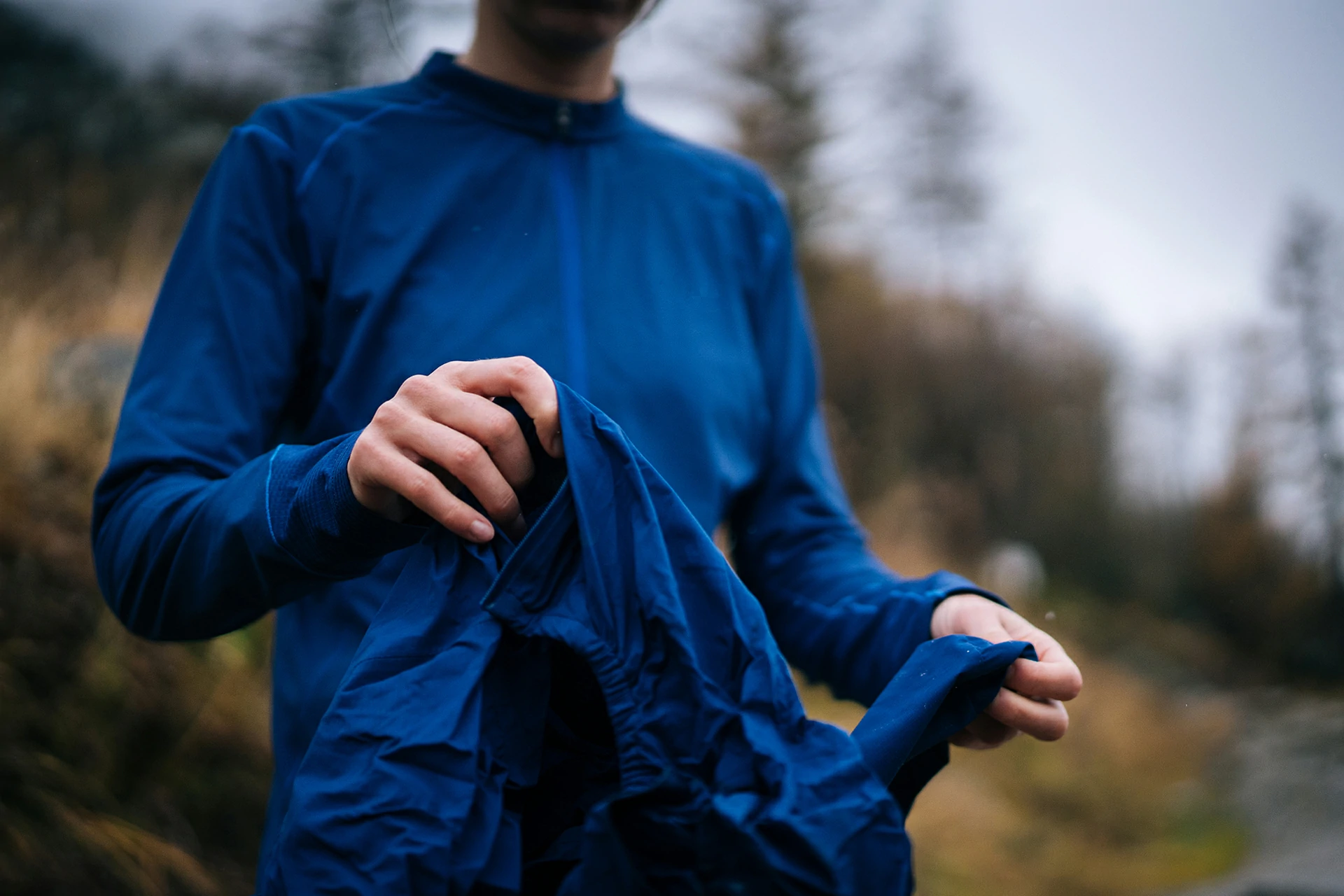
When we refer to "cool" fabrics, it's easy to imagine them as portable air conditioners constantly keeping you cool. However, this isn't entirely accurate. These fabrics don't just provide a direct sensation of coolness (contact cooling). In less humid environments, they excel at wicking away sweat from the skin, allowing clothes and skin to dry quickly. This freshness also contributes to the cooling effect, as it prevents your body temperature from rising further and helps dissipate heat. Once your body temperature and the environment reach a thermal balance, the cooling effect naturally ceases.

2. Understanding How Fabrics Help Cool the Body
When we feel cool, it's actually because our body temperature is dropping. But how can we lower our body temperature in the first place? The main heat dissipation mechanisms within the human body are influenced by environmental factors such as radiation, convection, conduction, and evaporation.
Thermal Conductivity: Different materials have different thermal conductivity. Materials with good conductivity are more likely to impart a cooling sensation, while materials with poor conductivity will feel warmer.
Thermal Convection: Thermal energy transfers from a higher temperature area to a lower temperature one. For instance, in winter, room temperature is usually lower than that of a given fabric. Similarly, when you first put on a feather jacket, your skin feels cool because your body heat transfers to the cooler material, causing you to feel cool initially.
Cooling Through Evaporation: When we sweat, heat dissipates, but if the sweat is retained by our clothing, it can make us feel damp and stuffy. When sweat evaporates and dries quickly, it helps cool us down.
It is important to mention that the easiest way to stay cool is to simply move away from or block out the source of heat. For example, clothing can prevent solar radiation from directly hitting our skin. Studies show that the body temperature of someone wearing regular clothing in the sun is lower than that of someone who is naked. The well-known fabric manufacturer Schoeller uses this principle in its Coldblack line of yarn, which is designed to keep the body temperature from rising.

3. Which Material Offers the Best Cooling Properties?
Polyester
Polyester fiber has low moisture content due to its hydrophobic nature, which allows it to dry quickly and provide a refreshing effect. Since polyester doesn't absorb water, clothes made from this fabric don’t easily stick to the skin, creating a cooling sensation. With a moisture regain of only 0.4%, sweat evaporates quickly without remaining in the yarn or cloth, allowing thermal energy to be expelled efficiently. Yarn manufacturers leverage these quick-drying properties to develop moisture-wicking yarns with uniquely shaped cross-sections, such as the well-known Coolmax. Compared to regular round-shaped yarn, this special structure increases the gaps between fibers while decreasing their size, promoting capillary action. This allows sweat to be discharged and evaporate faster, ensuring the wearer stays comfortable and doesn’t feel stuffy.
Nylon
Nylon has a high water content and good heat conductivity, which both contribute to its uniqueness to the touch and its cooling properties. Compared with polyester fiber, which has a moisture regain of only 0.4%, nylon has a moisture regain of 4%, which lends it greater heat conducting capabilities. However, this high moisture regain percentage means its hydrophobic capabilities aren’t as good, which leads to it drying more slowly than polyester. Therefore, some of the lighter and thinner nylon fabrics, even those which have not had any cooling capabilities added, can still provide a contact cooling sensation when used indoors. This high moisture regain capability of nylon is often further increased by manufacturers to improve its contact cooling effect.
Rayon
Rayon is a kind of cellulose fiber which is made from reprocessed wood pulp. Although the raw materials used to produce it are natural, it is necessary to add chemical substances to them during manufacturing, which means that the material is considered part artificial and part natural. Since it is a semi-artificial material, its moisture regain properties can be adjusted, making rayon not only soft to the touch but also giving it contact cooling capabilities.

4. Texture in Cooling Fabrics
Even when cooling yarn is used, thick and dense fabrics can reduce its cooling properties. Therefore, designing fabrics with a light or lower-density weave, or even into mesh, is essential. Lighter fabrics dry faster after coming into contact with sweat, accelerating the cooling effect through evaporation. In recent years, top brands have been researching human sweat patterns to design larger holes in hot areas of the body, leading to body mapping designs. If it's not possible to position these holes during weaving, a splicing approach can be used, incorporating mesh or other breathable fabrics in high-sweat areas like the underarms or back. Additionally, some brands have developed “moisture responsive transformation” fibers that lengthen after absorbing sweat, opening the fabric's pores and allowing body heat and water vapor to escape quickly. This enhances heat convection and speeds up sweat evaporation.

5. Conclusion
Nowadays, the market offers a wide range of cooling clothes made from various materials and using different techniques to achieve a cooling effect in multiple ways. Understanding cooling fabrics in depth before designing clothing can help select the most suitable materials and create better design plans. We hope the content above enhances your knowledge of cooling fabrics. For all your knitted cooling fabric needs, please don’t hesitate to contact us!


Related Post

How to Choose the Right Midlayer Fabric for Outdoor Apparel
Layne | 10-20-2026 | Views 80 times
How to Choose the Right Midlayer Fabric for Outdoor Apparel Choosing the right midlayer fabric is essential for developing functional outdoor apparel. A good midlayer should provide warmth without unnecessary bulk while maintaining breathability, moisture management, comf...

A Complete Analysis of Waterproof Fabrics
Layne | 09-24-2026 | Views 272 times
A Complete Analysis of Waterproof Fabrics: From Principles to Processes, Understand Waterproof Ratings in One Go Foreword: How can a piece of fabric be made “not a drop of water leak-proof”? Whether a jacket can truly keep out the rain depends not on how thick it...
Waterproof vs. Water-repellent: Fabric differences that 90% of people get wrong
Layne | 09-22-2026 | Views 230 times
Waterproof vs. Water-repellent: Fabric differences that 90% of people get wrong About the author Youvion focuses on developing functional fabrics for outdoor apparel, covering solutions for inner, middle, and hardshell outer layers. Through years of collaboration with global...

Recycled Polyester (rPET): What It Is, How It’s Made, and Why It Matters for Outdoor Fabrics
Layne | 09-14-2026 | Views 423 times
Recycled Polyester (rPET): What It Is, How It’s Made, and Why It Matters for Outdoor Fabrics Recycled polyester (rPET) is widely used in modern textile production. It offers many of the performance characteristics of conventional polyester, including strength, abrasion re...

Superwash Wool vs Natural Wool
Layne | 09-11-2026 | Views 381 times
Superwash Wool vs Natural Wool 1.What’s “Superwash” Merino wool is a high-performance fiber bestowed by nature—it’s breathable, temperature regulating, naturally odor-resistant, and can absorb up to 35% of its own weight in moisture without feeling damp. However, for d...

Sorona® Fabric: A Sustainable Bio-Based Textile Material Combining Performance, Comfort, and Innovation
Layne | 09-10-2026 | Views 487 times
Sorona® Fabric: A Sustainable Bio-Based Textile Material Combining Performance, Comfort, and Innovation 1.What Is Sorona® Fabric? Sorona® is a bio-based functional textile material developed from advanced polymer technology. It is a PTT (polytrimethylene terephthalate) fiber...
Send Your Inquiry
Get a quote within 24 hours